
Holistic Health Practitioner Certification: A Grounded Guide to Programmes and Practice
Many of us reach a point where we feel slightly out of step with our own bodies. It is a quiet, persistent sense that something is not quite right, even if we cannot name it. This feeling often leads people to seek a different kind of care. They look for someone who sees the whole picture, not just a single symptom.
Becoming a certified holistic health practitioner is about learning to offer that specific kind of support. It is a path of steady study and quiet observation. You learn to view health not as a switch to flip, but as a garden to tend.
In this guide, we will look at what it means to earn a holistic health practitioner certification. We will explore the types of training available and how to choose a path that feels right for you. We will also discuss the honest reality of the work. It is a rewarding profession, but it requires patience, stamina, and a willingness to do your own inner work first.
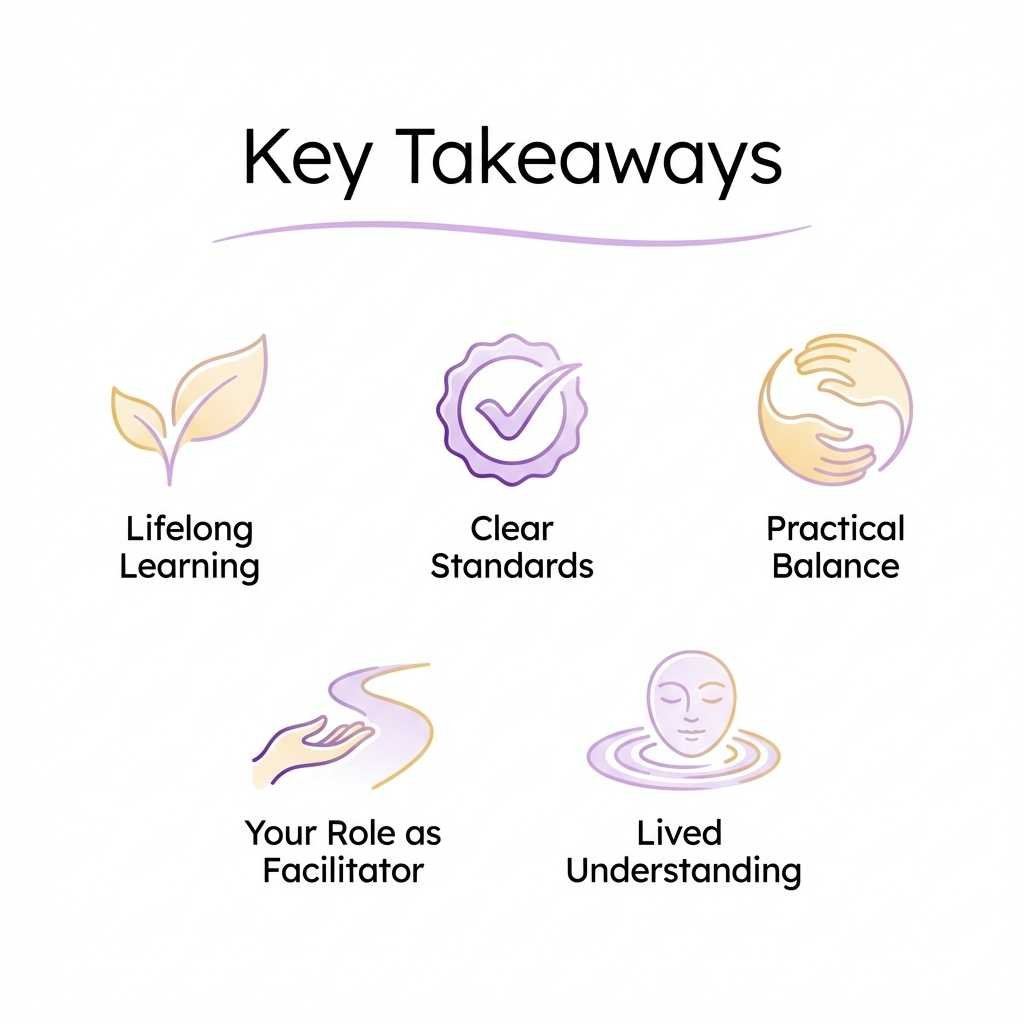
Key Takeaways
A Slow Process: Certification is not a quick fix. It is the start of a lifelong practice of learning and listening.
Clear Standards: Choosing a programme recognised by bodies like the CNHC or NBHWC helps ensure your training is grounded and professional.
Practical Balance: While an online holistic health practitioner certification offers flexibility, hands-on experience is often vital for physical therapies.
Your Role: You are a facilitator and a companion, not a "fixer." This mindset is at the heart of true holistic care.
Service Synergy: experiencing treatments yourself is the best research. It turns theory into lived understanding.
What is a Holistic Health Practitioner?
A holistic health practitioner (HHP) is someone who looks at the interconnected parts of a person's life. We consider how food, movement, rest, and thoughts work together. It is never just about one thing.
You can think of this role like a garden. You are not the one making the flowers grow. That is the plant's job. But you are the person clearing the weeds. You make sure the soil is nourished. You ensure there is enough light.
This profession requires a commitment to what we call "steady labour." It is about showing up for your clients with patience and a grounded presence. You offer a space where they can stop rushing and start noticing.
The Landscape of Certification
There is no single way to become a practitioner. The route you take depends on which tools you feel most drawn to using. The field is vast, but the principles remain shared.
1. The Holistic Health Diploma
Many people begin with a broad diploma. These programmes usually cover the basics of anatomy, nutrition, and lifestyle support. In the UK, these courses often take one to two years to complete.
They provide a sturdy foundation. It is like clearing a path through a dense wood so you can see where you are going. You learn the map of the human body before you begin trying to navigate it.
2. Specialised Modalities
Some practitioners prefer to focus on a specific tradition. This allows you to go deeper into one way of working with the body.
Shiatsu and Bodywork This is a Japanese form of bodywork. It uses gentle pressure to support the body's energy flow. It is based on the idea of helping the body find its own sense of balance.
If you are interested in this path, looking into Japanese Massage in London is a good first step. You need to understand how physical touch can speak to the nervous system.
Reiki and Energy Practice This is a quiet, subtle practice. It focuses on relaxation and finding a mental pause. It is less about manipulation and more about presence. It teaches you how to hold space without interfering.
Ayurveda and Nutrition An ancient system that looks at elemental energies. It asks how fire, earth, and water affect our daily wellbeing. This path often involves deep study of diet and daily rhythm.
3. Professional Board Certification
If you wish to work at a high professional level, you might look toward board certification. The National Board for Health & Wellness Coaching (NBHWC) is a prominent example.
This level of certification requires a specific number of training hours. It also involves a formal exam. It shows that you have done the "due diligence" required to support others safely. It tells the world you wash your hands before you cook, metaphorically speaking.
Exploring the Online Holistic Health Practitioner Certification
Many people now look for an online holistic health practitioner certification. This can be a very practical way to learn if you have a busy life or other work.
However, it is important to be realistic about what can be learned through a screen. It is like reading a book about how to tidy a room versus actually picking up the objects. You can learn the theory, but the practice is physical.
What to look for in an online programme:
Quality Mentorship: Does the course offer time to talk with an experienced teacher? You need someone to correct your course when you drift.
Realistic Timelines: Be wary of courses that promise a full qualification in a few weeks. True understanding takes time to settle.
Ethical Guidance: A good programme will teach you about boundaries. You need to know when to refer a client to a medical doctor.
Learning online requires a great deal of self-discipline. It is a quiet, solitary form of study that builds your internal focus. But remember, you cannot learn the weight of a hand on a shoulder from a video.
The Curriculum: What You Will Actually Study
Regardless of the path you choose, a grounded certification will cover specific areas. These are the pillars of the practice. Without them, the building cannot stand.
Anatomy and Physiology
You must know how the machine works. You will study bones, muscles, and systems. You learn how the heart pumps and how the lungs fill.
This is not just for doctors. A holistic practitioner in Croydon needs to know where the liver sits just as much as a surgeon does, though our work with it is different. We respect the structure.
Ethics and Boundaries
This is perhaps the most important module. You learn where you end and the client begins. You learn about confidentiality and respect.
Boundaries are like the fences in a garden. They keep the space safe for everyone. A good practitioner knows exactly where their role ends. We do not diagnose medical conditions. We support the person living with them.
The Business of Wellbeing
Many courses now include business training. This is a practical necessity. If you cannot manage your books, you cannot keep your clinic open.
You learn about insurance and record-keeping. You learn how to speak honestly about what you do. This is not about "sales." It is about clear communication.
Skill Development: Listening and Stewardship
While the textbook is important, the most vital skills of a practitioner cannot be found in a list of facts. They are developed through practice. They are the result of showing up, day after day.
Active Listening
This is the bedrock of our work. It is about hearing what a person is saying without immediately trying to find a solution. We often rush to fix things.
In this work, we pause. We let the client's words land. Often, the simple act of being heard is the first step in their process. It creates a sense of safety that is rare in modern life.
Grounded Speech
We explain things simply. We avoid dramatic claims or complicated jargon. These things can make a client feel more confused or dependent.
Instead, we use plain language. We say "tension" rather than "blockage" if it helps the client understand. We settle the room with our voice.
The Art of Touch
If your modality involves bodywork, your hands must learn to listen. This takes years. You learn to feel the difference between a muscle that is tight from work and one that is tight from fear.
Receiving a session of Shiatsu Massage and Reiki combined in Croydon can demonstrate this well. You feel the practitioner navigating your tension without forcing it. They negotiate with the body rather than demanding from it.
The Importance of Experience: Service Synergy
If you are considering a career in this field, we always suggest experiencing the therapies yourself. It is difficult to describe a path you have not walked. You cannot guide someone up a mountain you have only seen in pictures.
Learning from the Receiver's Chair
Book a session. Notice the intake form. Notice how the practitioner greets you. Notice the silence in the room. These are all lessons.
For example, a Japanese facial in London is not just about skin. It is about the muscles of the face and the tension we hold in our jaw. Experience that release. Then, you will understand the value of the service.
Building Empathy
When you are on the table, you feel vulnerable. You release control. Remembering this feeling is vital when you become the practitioner. It keeps you humble. It reminds you that it is an honour to be trusted with someone's care.
For those interested in the subtle energy aspect, experiencing Reiki in Croydon can clarify what we mean by "holding space." You feel the quiet support without physical manipulation. It is a distinct lesson in presence.
Professional Recognition and Standards
In the UK, we value the work of the Complementary and Natural Healthcare Council (CNHC). Being on an accredited register is like having a seal of integrity.
It tells your clients several things:
You are trained: You have met the national standards for your practice.
You are insured: You have the professional backing to work safely.
You are accountable: You follow a code of conduct.
Having a "good name" in the industry is built through this kind of transparency. It is more valuable than any fancy marketing. It shows that you take your role as a steward of health seriously.
The Business Reality: Steady Labour
We must be honest about the career. It is not always easy. Building a practice is like growing a hedge. It starts small and requires regular attention.
Starting Out
You will likely start part-time. You might work evenings or weekends while keeping your day job. This is a sensible way to grow. It takes the pressure off your practice.
Allows you to work without desperation. Clients can feel when a practitioner needs them to book for financial reasons. It changes the dynamic. Working from a place of stability allows you to serve better.
Working with Teams
There is a growing demand for wellbeing in the workplace. Companies are realising that staff need maintenance too. We offer services for business teams, and this is a viable path for new practitioners.
You might visit offices to offer chair massage or stress management talks. This requires a different set of skills. You must be professional, punctual, and able to work in busy environments.
Further Reading and Research
A good practitioner effectively never stops studying. The field is always moving. New research emerges about the fascia, the nervous system, and the gut-brain connection.
We maintain our own Shiatsu Blog to keep our community informed. Reading the thoughts of other practitioners is a great way to refine your own voice. It helps you see how others explain complex ideas simply.
Common Questions (FAQ)
Do I need a degree to get certified?
Not always. Many diploma programmes accept students based on their life experience and a genuine interest in wellbeing. However, some advanced board certifications, especially in coaching, may require prior higher education or significant health-related work experience. Check the specific prerequisites of the board you wish to join.
Can I work in a hospital with this certification?
Some practitioners work alongside conventional medicine in wellness centres, cancer wards, or hospice care. This is known as integrative care. Most practitioners, however, work in private practice, community clinics, or multi-disciplinary health centres where they have more control over the environment.
Is an online certification enough for bodywork?
If you want to do physical therapies like Shiatsu or massage, you will eventually need in-person training. You cannot learn the "touch," the pressure, or the biomechanics of the work through a video alone. Online study is excellent for theory, but hands-on hours are non-negotiable for safety.
How long does it take to build a practice?
Building a practice takes time. It is realistic to expect two to three years of steady labour to establish a full client base. Success comes from word-of-mouth recommendations and consistent service, not overnight hacks. Patience is your most valuable business asset.
Is this career physically demanding?
Yes, especially for bodywork. You must look after your own physical health. We call this "practising what you preach." You need strength, stamina, and good posture. If you burn out, you cannot support anyone else. Self-care is a professional requirement, not a luxury.
The Practice of Wellbeing
Becoming a certified practitioner is a commitment to a slower pace of life. It is about helping people notice the "weather warnings" their bodies are giving them. You help them see the wind picking up before the storm arrives.
Wellness is not a destination. It is an ongoing conversation. As a practitioner, your job is simply to help start that talk. You are not the hero of the story; the client is. You are the guide who holds the lantern.
If you approach your training with a sense of quiet service, you will find that the rewards are deep and lasting. You are helping to tidy the rooms of other people's lives so they can move more freely. There is great dignity in that work.
An Invitation to Reflect
Before you commit to a course, take a moment to pause. Ask yourself if you are ready for the steady work this role demands. Listen to your own body.
If you feel ready for a pause, or if you want to experience how a grounded practice feels, you can see our current availability here in Croydon. Whether you choose to study or simply seek support for yourself, we wish you a steady and calm path forward. Wellbeing is a slow practice, and there is no need to rush the process.
About the Author
This article was brought to you by Norma Powell, a dedicated Shiatsu practitioner at Norma Shiatsu Croydon. With a warm and steady approach, Norma provides nurturing Shiatsu treatments designed to ease physical tension and promote overall relaxation. Her practice is rooted in empathy and a genuine commitment to helping people feel safe and comfortable in their own bodies, focusing on the tangible, restorative benefits of touch-based therapy.
