
What to Expect in a Japanese Massage: A Gentle Guide to Shiatsu
Key Takeaways
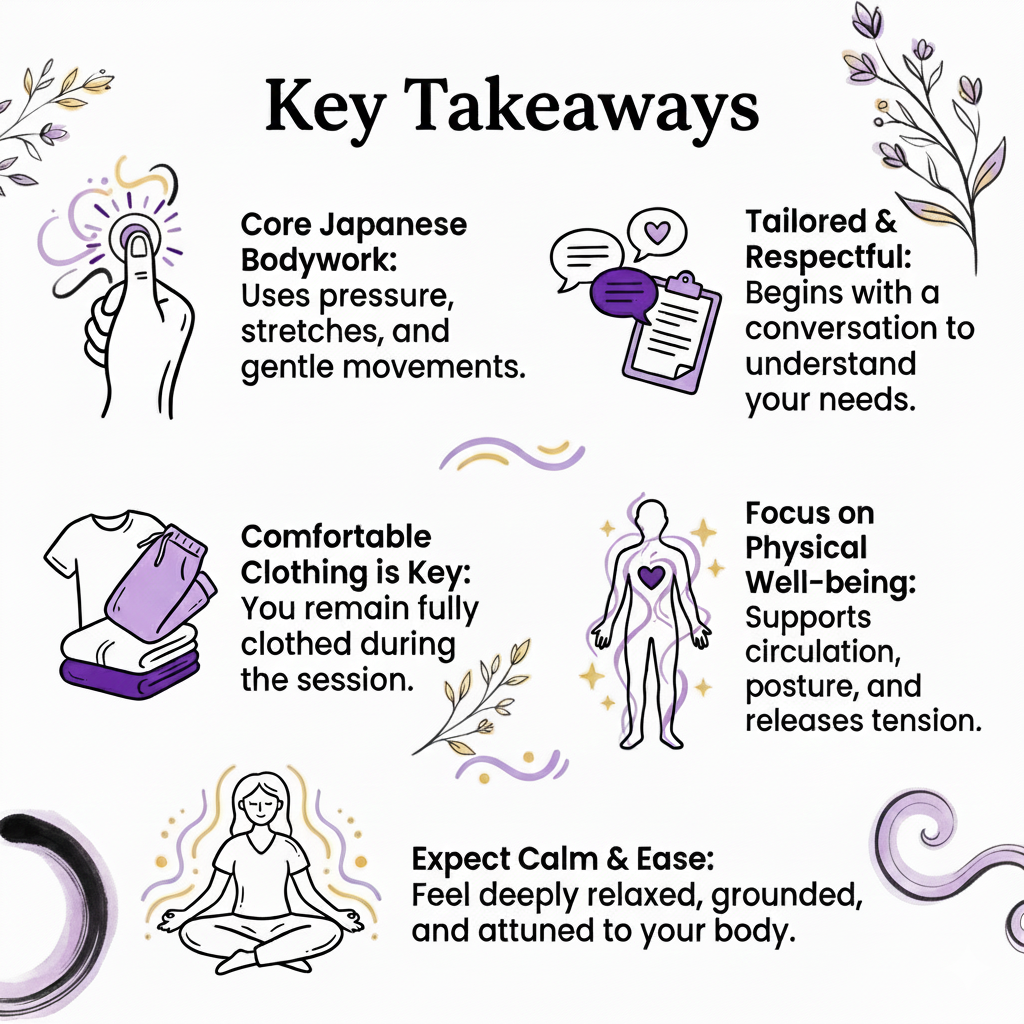
Shiatsu is a core Japanese bodywork style: It uses pressure, stretches, and gentle movements to ease tension and promote relaxation.
Sessions are tailored and respectful: Each treatment begins with a conversation to understand your needs, ensuring a personalised experience.
Comfortable clothing is key: You remain fully clothed during a session, allowing for ease of movement and comfort.
Focus is on physical well-being: The practice aims to support circulation, improve posture, and release physical discomfort without relying on spiritual concepts.
Expect a feeling of calm and ease: Many people feel deeply relaxed, grounded, and more attuned to their bodies after a session.
What to Expect in a Japanese Massage: A Gentle Guide to Shiatsu
Japanese massage encompasses a range of traditional bodywork practices, with Shiatsu being one of the most well-known and widely practised. Often, when people refer to a Japanese style of massage, they are thinking of the gentle yet profound experience of Shiatsu. This approach focuses on restoring balance and easing physical tension through mindful touch, pressure, and movement. It is a therapy rooted in a deep understanding of the body's natural rhythms and capacity for self-repair.
In a world that often moves too quickly, a Japanese massage, particularly Shiatsu, offers a chance to slow down and reconnect with your body. It’s a nurturing space where skilled touch helps to unravel the knots of daily life, leaving you feeling more grounded and at ease.
Elements of Traditional Japanese Bodywork
Traditional Japanese bodywork, such as Shiatsu and Anma, shares a common thread: a holistic approach to well-being that considers the entire person. While both are rooted in ancient practices, they offer distinct experiences. To review all forms, check out Japanese massage types.
Shiatsu Origins and History
Shiatsu, meaning "finger pressure," has a rich history that evolved from traditional Japanese massage techniques like Anma. Its development in the early 20th century saw the integration of Western anatomical and physiological knowledge, creating a unique system of bodywork. It became officially recognised as a therapeutic treatment in Japan, distinguished by its focus on pressure, stretching, and joint mobilisation. The practice aims to stimulate the body's natural healing abilities, promoting a sense of calm and physical restoration.
Anma Massage Therapy Definition
Anma is an older form of Japanese massage, predating Shiatsu. It is often described as a more vigorous, rhythmic massage, traditionally performed with oils and incorporating kneading, rubbing, and percussion techniques. While Anma focuses on stimulating circulation and relieving muscle stiffness, Shiatsu emerged as a more refined and systematic approach, often performed through clothing and emphasising sustained pressure and stretches. The difference between Shiatsu and Anma lies primarily in their techniques, historical development, and the depth of their theoretical frameworks.
Shiatsu Techniques Explained
At the heart of a Japanese massage session, particularly Shiatsu, are a variety of techniques designed to bring comfort and release. These methods are applied with careful attention to your body's responses, ensuring a deeply restorative experience.
Full Body Shiatsu Flow
A typical Shiatsu session involves a comprehensive full body Shiatsu flow. You will lie comfortably on a futon mat on the floor, fully clothed in loose, soft attire. The practitioner uses their palms, thumbs, fingers, elbows, and even knees to apply sustained, gentle pressure along specific pathways of the body. This pressure is not about force but about encouraging a release of tension and promoting a sense of flow. The rhythm is steady and unhurried, allowing your body to respond naturally. The aim is to ease physical tension, improve posture, support circulation, and promote overall relaxation.
Japanese Stretching in Massage
Integral to many Japanese massage styles, including Shiatsu, is the inclusion of gentle Japanese stretching in massage. These stretches are performed passively by the practitioner, meaning you simply relax and allow your body to be moved. They are designed to increase flexibility, release stiffness in joints, and lengthen muscles, all contributing to a greater sense of ease and freedom in movement. These stretches are always performed within your comfortable range, with no sudden or forceful movements.
Hara Diagnosis in Shiatsu
A unique aspect of Shiatsu is the practice of Hara diagnosis. "Hara" refers to the abdomen, which in traditional Japanese medicine is considered a vital centre for assessing a person's physical condition. At the beginning of a session, the practitioner may gently touch and palpate your abdomen. This gentle touch helps them to gain a deeper understanding of your body's current state, identifying areas of tension or imbalance. This information then guides the practitioner in tailoring the session specifically to your needs, making each treatment truly individual.
First Time Shiatsu Session Guide
Preparing for your first Shiatsu session can help you feel more comfortable and get the most out of your experience. It's a straightforward process, designed to ensure you feel at ease from the moment you arrive.
How to Prepare for Shiatsu
When considering how to prepare for Shiatsu, the main thing is to ensure you are comfortable. It’s best to avoid heavy meals or excessive caffeine before your appointment. Arriving a few minutes early can help you settle in and relax before the session begins. You'll have a brief chat with your practitioner about your reasons for seeking treatment and any areas of particular concern. This initial conversation is part of the Shiatsu intake and evaluation process, allowing the practitioner to tailor the session to your specific needs.
What to Wear for Shiatsu Session
One of the most common questions is what to wear for a Shiatsu session. The answer is simple: comfortable, loose-fitting clothing. Since you remain fully clothed throughout the treatment, choose garments that allow for easy movement and do not restrict your breathing. Soft fabrics like cotton are ideal. This ensures that the practitioner can apply techniques effectively and that you can relax completely without any discomfort from your clothing.
Feeling After a Shiatsu Treatment
Many people wonder about the feeling after a Shiatsu treatment. It’s common to feel deeply relaxed, calm, and grounded. Some describe a sense of lightness or increased awareness of their body. Occasionally, you might feel a little tired, which is a natural response as your body processes the treatment and begins to rebalance. It’s a good idea to drink plenty of water and avoid strenuous activities for the rest of the day to allow these effects to settle in.
Our Unique Insight: The Gentle Power of Touch
At Norma Shiatsu Croydon, we believe in the gentle power of touch to bring about profound changes in the body. Our approach to Japanese massage, particularly Shiatsu, is rooted in the understanding that your body holds an innate wisdom. Through careful, attuned touch, we aim to listen to what your body needs, helping to release tension that may have accumulated over time. This isn't about forceful manipulation; it's about creating a supportive environment where your body can remember how to relax and restore itself. We focus on how Shiatsu works through movement, pressure, and mindful touch to ease physical tension, improve posture, support circulation, and promote overall relaxation. We describe what people can feel and experience, not abstract or spiritual concepts.
Actionable Strategy: Simple Steps to Enhance Your Well-being
Even outside of a massage session, there are small, actionable steps you can take to support your body's well-being and maintain a sense of calm.
Mindful Breathing: Take a few moments each day to practice deep, slow breathing. Inhale deeply through your nose, feeling your abdomen rise, and exhale slowly through your mouth. This simple practice can significantly reduce stress and promote relaxation.
Gentle Stretching: Incorporate light, easy stretches into your daily routine, especially for your neck, shoulders, and back. Even a few minutes of gentle movement can help release accumulated tension.
Hydration: Ensure you're drinking enough water throughout the day. Proper hydration supports all bodily functions, including muscle flexibility and circulation.
Listen to Your Body: Pay attention to signals of tension or fatigue. When you notice these, take a short break, move around, or simply rest. Honoring your body's needs is a powerful act of self-care.
Frequently Asked Questions (FAQ)
What is a Japanese style of massage called?
The most widely recognised Japanese style of massage is called Shiatsu. Meaning "finger pressure," Shiatsu is a traditional hands-on therapy that uses sustained pressure, stretches, and joint rotations to promote relaxation and well-being. It is performed through clothing on a futon mat, focusing on the body's natural energy pathways to release tension and support the body's innate healing capabilities. Other traditional forms include Anma, which is an older, more vigorous style.
What does Japanese Massage include?
Japanese massage, particularly Shiatsu, typically includes a combination of sustained pressure applied with palms, thumbs, fingers, elbows, and knees, along with gentle stretches and joint mobilisations. The practitioner works to release tension, improve flexibility, and encourage a sense of balance throughout the body. The session is tailored to individual needs, often starting with a conversation and gentle abdominal assessment to guide the treatment. For a full breakdown, see our page Shiatsu Massage Explained.
What to expect in a Japanese massage?
In a Japanese massage, especially Shiatsu, you can expect a calm and respectful environment. You will remain fully clothed in comfortable attire and lie on a soft mat. The practitioner will apply rhythmic, gentle pressure and incorporate passive stretches. The experience is deeply relaxing, aiming to ease physical tension and promote a sense of grounded well-being. Many people feel a renewed sense of calm and improved body awareness afterwards. You can check our current pricing and availability for sessions.
Conclusion
Exploring what Japanese massage includes, particularly the gentle yet profound practice of Shiatsu, offers a pathway to deeper well-being. From understanding the techniques and flow of a session to knowing what to expect and how you might feel afterwards, the journey into this traditional bodywork is one of nurturing and reconnection. By embracing the principles of mindful touch and movement, Shiatsu provides a supportive space for your body to release tension, improve posture, and find a renewed sense of balance. It's an invitation to experience a grounded, unhurried approach to caring for yourself. You can also explore options for Japanese Massage London UK.
About the Author
This article was brought to you by Norma Powell, a dedicated Shiatsu practitioner at Norma Shiatsu Croydon. With a warm and steady approach, Norma provides nurturing Shiatsu treatments designed to ease physical tension and promote overall relaxation. Her practice is rooted in empathy and a genuine commitment to helping people feel safe and comfortable in their own bodies, focusing on the tangible, restorative benefits of touch-based therapy.
