
Your Guide to Holistic Health UK: Principles, Treatments & Finding Care
Many of us living in the UK today share a common feeling. It is the sense that things are "not quite right," even if we are medically healthy. You might feel a lingering heaviness in your shoulders after the commute. Perhaps you find it difficult to settle your mind at night, or you notice your patience wearing thin. These are not always medical emergencies, but they are signals. Holistic Health UK is an increasingly recognized approach that listens to these signals before they become noise.
It views you as a whole person. You are not just a list of symptoms to be managed. You are a complex mix of physical needs, emotional states, and energy levels.
At Norma Shiatsu Croydon, we believe that health is not just the absence of pain. It is the presence of life. This guide explores how you can navigate the landscape of holistic care with confidence and clarity.
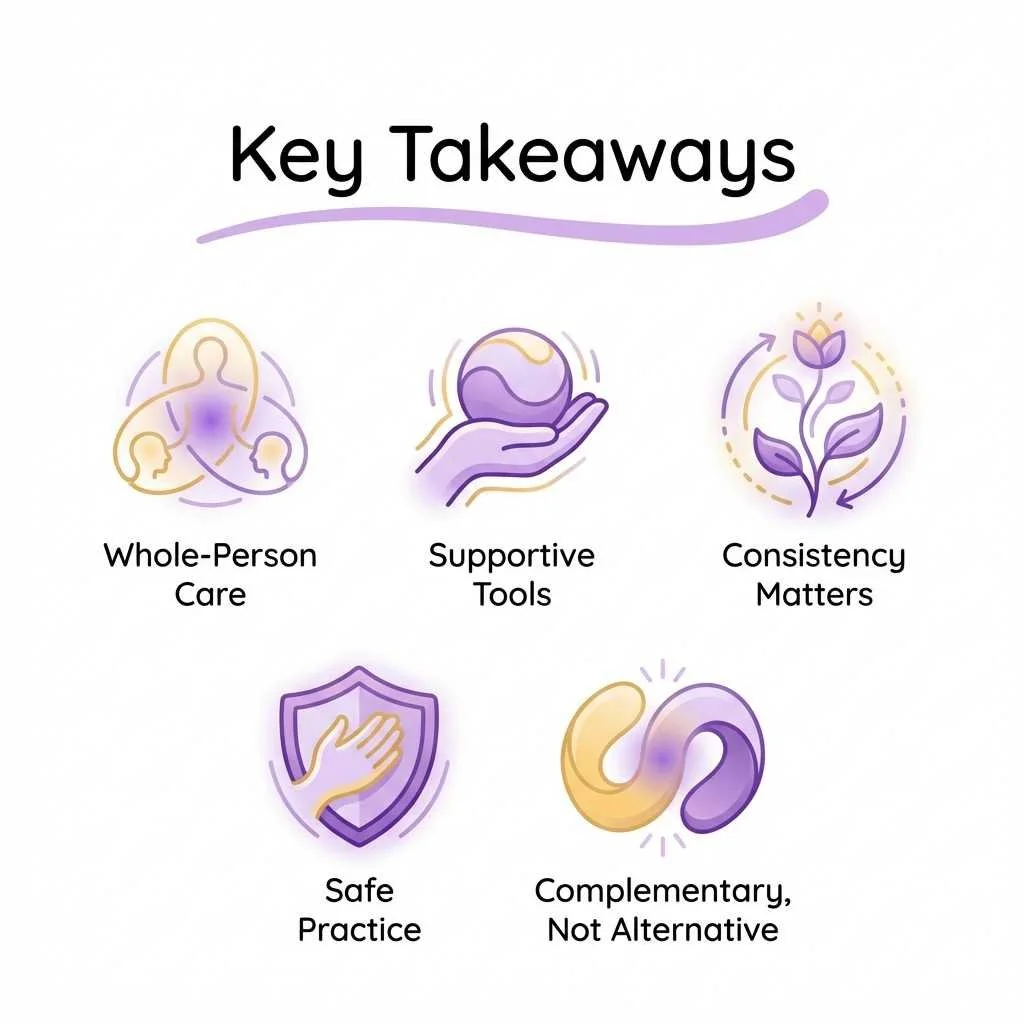
Key Takeaways
Whole-Person Care: Holistic health looks at the connection between your mind, body, and emotions.
Supportive Tools: Therapies like Shiatsu and Reiki are not "cures." They are tools to help you find a sense of balance.
Consistency Matters: Wellbeing is an ongoing practice, much like tending a garden over many seasons.
Safe Practice: Always look for a registered practitioner who carries insurance and credible qualifications.
Complementary, Not Alternative: These therapies work best alongside conventional medical advice, not against it.
Workplace Wellness: Holistic support is effective for business teams facing burnout.
Understanding Holistic Healthcare UK
To understand the concept of holistic healthcare uk, it helps to think of a tidy room.
When a room is cluttered, it is hard to move around. You cannot find what you need. You might trip over things.
Holistic health is like tidying that space. It does not change the room itself. But it makes it easier for you to exist within it.
In the UK, the conventional medical model is excellent at crisis care. If you break a leg, you go to A&E. We need that system. However, we often focus on fixing things only when they break.
The holistic approach is more like a regular car service. It is about maintenance. It is about listening to the "weather warnings" the body gives us—like tension or fatigue—before a storm arrives.
The Garden of Wellbeing
Think of your health as a garden path. Over time, leaves and debris might cover the way. This is normal. It is the result of living a busy life.
Working with holistic uk practices is like gently clearing those leaves.
It doesn't create a new path. It makes the one you are already on much clearer to walk.
This approach respects that you are the one doing the walking. The practitioner is simply there to help you clear the way. There is no magic occurring. It is simply the removal of obstacles so your body can do what it knows how to do: rest and repair.
The Principles of Holistic Care
When we discuss this field, we must talk about honesty.
True holistic care is grounded in stewardship. This means taking quiet responsibility for the body you live in.
A practitioner should never claim to have a magic wand. Instead to support your journey, they should offer a calm, respectful space. In this space, you can begin to notice where you are holding tension.
You can notice how your breath moves. This awareness is where change begins.
It is not about a sudden transformation. It is about the steady, quiet work of feeling a little more settled each day.
The Physiology of "Being Heard"
Why does this matter?
When you feel heard and safe, your nervous system shifts. You move out of "fight or flight" mode. You enter the "rest and digest" state.
This is a biological reality. It is not "woo-woo."
When the body enters this state, your heart rate slows. Your muscles loosen. Your digestion improves. This is the foundation of holistic healthcare uk. It is the creation of a biological environment where you can thrive.
Exploring Common Holistic UK Treatments
There are many ways to support your wellbeing. In the UK, several traditions have become well-established. They are trusted for their ability to support relaxation and awareness.
Shiatsu: A Quiet Conversation with the Body
Shiatsu is a Japanese form of bodywork. It involves comfortable pressure on specific parts of the body. Usually, you lie on a soft mat on the floor.
It is often described as a "quiet conversation." The practitioner listens to the tension in your muscles. They tune into the rhythm of your breath.
This may help you notice where you have been holding onto stress. By supporting the body to relax, Shiatsu helps you find a sense of balance. This feeling often stays with you long after you leave the room.
If you are looking for Japanese Massage in London, Shiatsu offers a unique approach. It does not use oils. You stay fully clothed. This makes it a very accessible therapy for those who might feel vulnerable in a traditional spa setting.
Reiki: Finding a Moment of Stillness
Reiki is a very gentle practice. It involves the practitioner placing their hands lightly on or just above the body.
For many in the UK, Reiki provides a much-needed pause. It is a time to be still. It allows the mind to quieten down.
It is not a miracle. It is simply a way to support your own sense of calm. This makes it easier to navigate the busy parts of your life.
If you are curious about energy work, looking for Reiki in Croydon can be a gentle entry point. It requires nothing of you but to lie down and rest.
Synergistic Treatments
Sometimes, the body needs a combination of approaches. You might have physical knots in your shoulders, but also feel emotionally drained.
In these cases, combining therapies can be helpful. We offer sessions of Shiatsu Massage and Reiki combined in Croydon. This addresses the physical tension through touch, and the emotional fatigue through stillness.
Japanese Facials: Reflection and Care
A Japanese facial is more than just a skin treatment. It is a way of caring for the face as a reflection of the whole self.
We hold a lot of tension in our jaw and forehead. This is often where we "store" our worries.
By using gentle techniques to support circulation, we can release this facial tension. It offers a deep sense of relaxation.
If you are seeking a Japanese facial in London, remember that it is not vanity. It is a reminder that looking after yourself is a valid and necessary practice.
Finding a Trusted Holistic Health Practitioner UK
Choosing someone to support your health is a personal decision. It requires discernment.
In the UK, the field of holistic health is widely practiced, but regulations can be complex to navigate. This means you must look for certain signs of a professional and grounded approach.
The Importance of Voluntary Regulation
A good holistic health practitioner uk will usually be registered with a professional body.
Look for membership with the CNHC (Complementary and Natural Healthcare Council) or the FHT (Federation of Holistic Therapists). These bodies were set up with government support to protect the public.
Registration tells you several things:
The practitioner has completed approved training.
They carry professional insurance.
They agree to a code of conduct.
If you are looking for a holistic practitioner in Croydon, always ask about their background. We are always happy to share our journey and qualifications with you.
Transparency and Integrity
A professional will be transparent. They will explain their methods in plain English.
They will not use "hype." They will not make dramatic claims about curing serious illnesses. Instead, they will offer a clear initial consultation.
Trusted practitioners know their limits. If they believe you need medical attention, they will tell you to see your GP. This is the mark of a safe provider.
Navigating Business Names: Holistic Health Limited
When searching online, you may see names like holistic health limited or similar organisations.
It is important to understand what you are looking at. "Limited" largely refers to the business structure. It does not automatically guarantee the quality of care.
Some of these are large clinics with many staff. Others are small, private practices run by a single dedicated person.
Large vs. Small Practices
Large Clinics: Often offer a wide menu of services. They may have a reception team.
Private Practitioners: Often offer a more personal connection. You deal directly with the person treating you.
Whether you choose a large centre or a sole practitioner, the connection is key. You should feel heard. You should never feel rushed.
A professional environment is one where you feel safe to simply be yourself.
Holistic Health for Business Teams
Stress does not just affect individuals. It affects entire organisations.
Many companies in the UK are realizing the importance of team wellbeing. Burnout is a real risk. It leads to staff absence and low morale.
At Norma Shiatsu Croydon, we extend our care to business teams.
We can provide on-site treatments or workshops. This might look like chair Shiatsu for your staff, or sessions on mindfulness and breathing.
This is not just a "perk." It is a way of maintaining the health of the collective. When your team feels supported, they can work with more clarity and kindness.
How to Become a Holistic Health Practitioner UK
Many people find that their own journey into wellbeing leads them to want to act as a guide for others. The path of how to become a holistic health practitioner uk is one of dedication.
It is not a quick process. It is not a weekend workshop.
The Path of Study and Practice
To work professionally, you need significant training.
For therapies like Shiatsu, this involves usually three years of study. You learn anatomy, physiology, and pathology. You must understand where the organs are and how the body moves.
You also study the philosophy of the treatment.
If you are interested in this path, you might look for a school. You may search for terms like holistic health training ltd to find accredited colleges.
A good course will also teach you about ethics. You learn about boundaries. You learn how to maintain a "good name" in the community.
Becoming a practitioner is not about becoming an "expert" who fixes people. It is about learning how to be a steady companion. You accompany others on their path to ongoing wellbeing.
For more insights on the philosophy of our practice, you can read our Shiatsu Blog.
Holistic Health and Support Ltd: The Wider Context
You might also encounter organisations with names like holistic health and support ltd. These often provide services that work alongside standard healthcare.
This reflects a growing trend in the UK. We are moving toward "social prescribing."
This is where a doctor might suggest non-medical support for your health. It might be joining a walking group. It might be trying meditation.
It is important to remember that holistic therapies are supportive tools. They work best as part of a wider, structured lifestyle.
This path includes things like:
Eating food that nourishes you.
Moving your body gently.
Getting enough sleep.
A practitioner can support you, but the day-to-day stewardship of your health remains in your hands.
FAQ: Common Questions about Holistic Health UK
Is holistic health the same as alternative medicine? In the UK, we prefer the word "complementary." This means the treatments work alongside your GP’s advice. We do not replace medical care. We support the person receiving it.
Will I feel better after one session? You may feel more relaxed immediately. Many people report better sleep right away. However, wellbeing is a slow conversation. Most people find that a series of sessions helps them notice a more lasting change over time.
What should I wear to a Shiatsu session? You stay fully clothed. It is best to wear soft, loose clothing. Leggings, tracksuits, or a gentle cotton t-shirt allow you to move comfortably.
How do I know if a therapy is right for me? Listen to your instincts. A grounded practitioner will offer a consultation. You can ask questions without pressure. If it feels like a safe, calm space, it may be the right time to start.
Do you offer treatments for stress specifically? Yes. Stress is the most common reason people visit us. Shiatsu and Reiki are specifically designed to down-regulate the nervous system, helping you find ground when things feel overwhelming.
A Soft Invitation
If you have been feeling out of balance, please know that you do not have to rush toward a solution. Wellbeing is not a destination you reach. It is a way of travelling.
You do not need to be "fixed" because you are not broken. You may just be a little cluttered.
Taking a moment to pause and listen to your body is a brave first step. Whether you choose Shiatsu, Reiki, or simply a quiet walk in a local park, the goal is the same. You are looking for a little more space. You are looking for a little more peace.
If you feel ready for a pause, you are welcome to look at our current availability. We are here to provide a quiet, grounded space whenever you feel the need to settle.
About the Author
This article was brought to you by Norma Powell, a dedicated Shiatsu practitioner at Norma Shiatsu Croydon. With a warm and steady approach, Norma provides nurturing Shiatsu treatments designed to ease physical tension and promote overall relaxation. Her practice is rooted in empathy and a genuine commitment to helping people feel safe and comfortable in their own bodies, focusing on the tangible, restorative benefits of touch-based therapy.
Connect with Norma on LinkedIn
Sources
Complementary and Natural Healthcare Council (CNHC): https://www.cnhc.org.uk/ - The independent UK regulator for complementary healthcare practitioners.
Federation of Holistic Therapists (FHT): https://www.fht.org.uk/ - The UK's largest professional association for therapists.
National Institute for Health and Care Excellence (NICE): https://www.nice.org.uk/ - Providing national guidance and advice to improve health and social care.
Professional Standards Authority: https://www.professionalstandards.org.uk/ - Oversees statutory bodies that regulate health and social care professionals in the UK.
