
Integrate These Holistic Health Tips for Daily Well-being & Longevity
In our current world, it is common to feel a little out of sync. You might find that even when you are eating reasonably well, a sense of quiet fatigue or unease remains beneath the surface. This happens often. We are taught to look at our health as a series of separate parts. We tend to wait for something to break before we try to fix it. We rarely tend to the whole system as it grows.
Holistic health is simply the practice of looking at the whole person. It recognises that your physical body, your thoughts, and your environment are all connected. To help you find your way back to balance, we have gathered some grounded holistic health tips. These are not instant cures. They are small, steady actions you can take to support your own wellbeing.
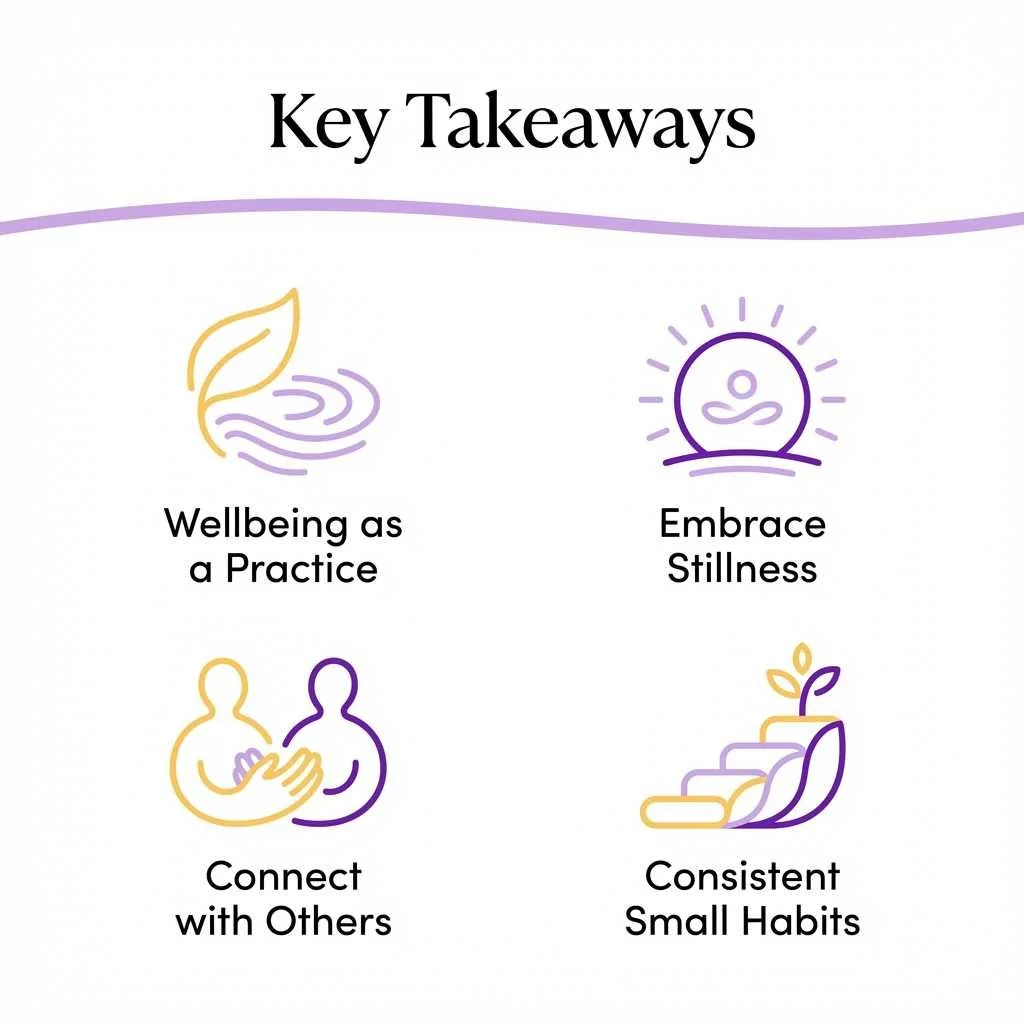
Key Takeaways
Wellbeing is a Practice: Feeling well is an ongoing process of daily stewardship, much like keeping a garden tidy.
Listening Early: Paying attention to small signals from the body—the 'weather warnings'—can help you stay balanced before a storm hits.
Supportive Tools: Practices like Shiatsu and Reiki serve as gentle maintenance to help your body find its own sense of alignment.
The Power of Stillness: Creating space for rest and quiet is as vital for your health as nutrition or movement.
Community Matters: Connection with others is a biological need, reducing stress and engaging the vagus nerve.
Environment Reflects Inner State: A cluttered space often mirrors a cluttered mind; simplifying your surroundings can aid mental clarity.
Consistency Over Intensity: Small, daily habits outweigh occasional grand gestures in the long run.
1. Tending to the Foundations: Nutrition and Stewardship
When we discuss holistic health, we must start with the basics. These are the foundations upon which everything else stands.
Food as Maintenance Material
Think of your body like a home you live in. The food you eat is the maintenance material. It is the care you put into tidying that home so you can move around freely. If we use poor materials to patch the roof, the rain eventually gets in.
Choosing whole, unprocessed foods is a simple way to provide your system with what it needs. This is not about strict rules. It is not about deprivation. It is about being a good steward of your physical self. Studies consistently show that a diet rich in whole plants and low in processed items supports the immune system. In fact, a significant portion of your immune function resides in your gut. When you nourish your gut, you support your body’s ability to defend itself.
Try to notice how different foods make you feel an hour after eating. Does a heavy lunch make you sleepy? Does a lighter meal give you sustained focus? This quiet observation is often more helpful than following a generic meal plan. It builds an honest relationship with your hunger and energy.
Hydration as Flow
Water is the river that carries nutrients to your cells. When the river runs dry, the transport slows down. Things get stuck.
Many of us mistake thirst for hunger or fatigue. Before you reach for a snack or a second coffee, try a glass of water. It is a small act of kindness to your organs. It helps your joints move smoothly and keeps your skin—your largest organ—resilient.
2. Sleep as Your Essential Car Service
We often treat sleep as an optional luxury. We trade it for late-night work or entertainment. But sleep is actually the body's time for essential maintenance. It is like a regular car service that keeps everything running. You wouldn't drive a car for 100,000 miles without an oil change and expect it not to break down.
The Rhythm of Rest
Establishing a regular rhythm helps your internal clock settle. Try going to bed and waking up at similar times. This consistency creates a sense of safety within your nervous system. Your body learns when it is time to wind down and when it is time to be alert.
Research indicates that chronic sleep deprivation is linked to a host of long-term health issues. But more immediately, it affects your mood and patience. When you are well-rested, the daily bumps in the road feel smaller.
Creating a Sanctuary
Try to make your bedroom a quiet sanctuary. Remove screens and bright lights an hour before bed. This allows your mind to begin its process of slowing down. Light signals 'daytime' to your brain. Darkness signals 'rest.' By respecting this natural cycle, you allow your hormones to balance themselves.
3. Finding Balance Through Movement and Touch
Movement does not have to be intense or punishing to be effective. In fact, for longevity, gentle and consistent movement is often more sustainable.
Walking as Medicine
A simple walk in the fresh air is one of the most effective tools available. It helps to clean the slate of the mind. It encourages the body to move in a natural, rhythmic way.
Notice the sensation of your feet hitting the ground. This simple act of grounding pulls your attention away from a busy mind. It brings you back into your physical self. If you work in the city, the pace can become frantic. Sometimes, seeking out a Japanese Massage in London can be a helpful way to release the stiffness that accumulates from city living. It reminds the muscles of their natural length.
Stretching the Garden Path
Think of your body's flexibility like a garden path. Over time, leaves and debris build up. If we don't sweep the path, it becomes harder to walk through. We feel stiff. We feel limited.
Gentle stretching clears those paths. It allows for better circulation. It helps you notice where you are holding tension. You might not realize you are clenching your jaw until you actively try to relax it.
4. The Mental Pause: Breath and Quiet
Our minds are often busy with plans for the future. We worry about the past. Finding a moment of quiet in the present is a vital part of staying well.
Breath as a Signal
The breath is a unique tool. It connects your conscious mind to your involuntary nervous system. When you are stressed, your breath becomes short and shallow. This tells your body there is a threat.
By slowing your breath, you send a signal to your body that it is safe to relax. This is a physiological switch. It is not just 'in your head.' Try taking three slow, deep breaths whenever you feel the 'wind picking up' in your day. This small pause can prevent stress from building into a larger storm.
Having a Guide
Sometimes, it is difficult to find this quiet on your own. Our minds are very good at making noise. Working with a skilled holistic practitioner in Croydon can provide a container for that silence. Guidance helps you navigate the noise without getting lost in it.
5. Understanding Energy Flow in Plain English
In many traditions, health is seen as a flow of vitality through the body. When this flow is clear, we tend to feel more resilient. We feel capable.
The Concept of Flow
You might hear this called 'Qi' (Chi) or Prana. In a grounded sense, think of it as your body's communication system. It is how your nervous system speaks to your limbs. It is how blood delivers oxygen.
When we are stressed or tired, this flow feels stagnant. It is like a stream blocked with stones. We feel heavy. We feel stuck. This is where holistic therapies offer support. They do not force the water to move. They simply help remove the stones so the water can resume its natural course.
Shiatsu and Reiki: A Method of Support
Shiatsu is a Japanese bodywork therapy. It uses gentle pressure on specific points. It is not about 'fixing' a problem. It is about creating space. It invites your body to verify where the tension is and release it.
Reiki is quieter. It is a support for the nervous system. If you are feeling particularly depleted, looking into Shiatsu Massage and Reiki combined in Croydon can be deeply restorative. The combination addresses the physical structure through Shiatsu and the quiet, settling needs of the mind through Reiki.
If you prefer a strictly quiet approach, Reiki in Croydon offers a peaceful hour. You simply 'be' without any pressure to 'do' or 'perform.'
6. Skin Deep: The Mirror of Our Health
Our skin often reflects our internal state. When we are tired or poorly nourished, our skin loses its vitality. It is another 'weather warning' system.
Caring for your face is not just vanity. It is caring for the muscles we use to communicate every day. We hold immense tension in our foreheads and jaws. A Japanese facial in London works on these specific muscles. It uses the principles of acupressure to release the face. When the face relaxes, the signals sent to the brain are ones of calm.
7. Wellness in the Workplace
We often separate our 'work life' from our 'health life.' But we are the same person in both places. Stress at work travels home. Tension at home travels to work.
Maintaining the Team Engine
Business teams function like an engine. If one part is grinding, the whole engine works harder. It overheats. Burnout is simply the engine seizing up from lack of oil.
We offer services for Business teams because we understand this need. Bringing Shiatsu or holistic workshops into the corporate space acts as preventative maintenance. It acknowledges that employees are human beings with physical and emotional needs. A team that knows how to breathe and release tension is a team that endures.
8. Listening to Your 'Weather Warnings'
This is perhaps the most critical skill. Learn to listen to your body’s early signals. These are the small changes in the wind before a storm arrives.
Maybe it is a slight tightness in your shoulders. Maybe your digestion is a little off. Maybe you are snapping at loved ones. When you notice these things early, you can take small steps.
Perhaps you need an extra hour of sleep. Perhaps you need a quieter evening. Taking action when the signals are small is easier than waiting for a total breakdown. It takes honestly. It takes the courage to say, "I need to rest today."
The Best Holistic Health Tips for Long-Term Maintenance
If you wish to weave these ideas into your life, start slowly. Here are some of the best holistic health tips structured as a practical, unhurried checklist:
Morning Light: Spend five minutes outside shortly after waking. This helps your body find its natural rhythm.
The Single Task: Choose one task today—like drinking a cup of tea—and do it without your phone. Just drink the tea.
Daily Check-in: Once a day, ask, 'How does my body actually feel right now?' Do not judge the answer. Just hear it.
Hydrate Simply: Drink a glass of water before you start your morning coffee.
Soft Movement: Spend a few minutes before bed moving your neck. Release the day’s hold.
Seek Knowledge: For more in-depth reading on specific practices, our Shiatsu Blog offers further resources and thoughts.
Common Questions (FAQ)
Is holistic health a replacement for seeing a doctor? No, it is a supportive practice. Holistic health tips are meant to work alongside conventional care. We focus on lifestyle, stress reduction, and general wellbeing. If you have a medical condition, always consult your physician holding onto your holistic practice as a tool for resilience and comfort.
How quickly will I feel better? Wellbeing is a change over time. You might feel more relaxed after a single session of Shiatsu. You might feel refreshed after one good night of sleep. However, lasting change comes from small, consistent actions. It is like watering a plant; the growth happens slowly, day by day.
Do I need to believe in 'energy' for these tips to work? Not at all. Whether you think of it as 'energy flow' or simply as your nervous system relaxing, the benefits remain. The physical release of muscle tension and the reduction of cortisol occur regardless of your philosophy. It is a physiological response to safety and touch.
What if I find it hard to stay consistent? It is helpful to remember that you do not have to be perfect. If you forget your practice one day, simply start again the next. It is a slow conversation with yourself, not a test to be passed. Self-compassion is, in itself, a holistic health practice.
An Invitation to Find Your Balance
If you feel that you are ready for a pause, we are here to support you. Our sessions in Croydon provide a quiet, grounded space where you can begin to listen to your body again.
We do not promise to fix you, because you are not broken. We offer a space where you can remember what it feels like to be whole. Whether you are interested in the physical focus of Shiatsu, the gentle quiet of Reiki, or a restorative facial, these tools can help you find a sense of balance.
Take a deep breath. There is no rush. Wellbeing is simply the act of taking one grounded step at a time.
Sources
American Psychological Association. "Stress effects on the body."
Mayo Clinic. "Sleep deprivation: Symptoms and causes."
Harvard Health Publishing. "The gut-brain connection."
National Institutes of Health. "Massage therapy: What you need to know."
Scientific Reports. "Spending at least 120 minutes a week in nature is associated with good health and wellbeing."
About the Author
This article was brought to you by Norma Powell, a dedicated Shiatsu practitioner at Norma Shiatsu Croydon. With a warm and steady approach, Norma provides nurturing Shiatsu treatments designed to ease physical tension and promote overall relaxation. Her practice is rooted in empathy and a genuine commitment to helping people feel safe and comfortable in their own bodies, focusing on the tangible, restorative benefits of touch-based therapy.
Connect with Norma on LinkedIn
