
Understanding the Holistic Health Coach: Your Path to Whole-Person Wellness
In our modern lives, a sense of disconnection is common. You might have a quiet suspicion that 'something isn't quite right,' even if you cannot put a finger on it. Perhaps you feel persistently tired, or your mind feels cluttered. Often, we look for a quick fix, only to find the feeling returns a few weeks later. This is where the Holistic Health Coach plays a supportive role. They offer a steady presence for those who want to look at their health as a whole, rather than as a collection of separate symptoms.
Wellness is not a race. It is a slow, steady walk. When you work with a coach, you are not signing up for a drastic overhaul. You are agreeing to listen to your body again.
At Norma Shiatsu Croydon, we believe in this unhurried approach. We see how physical therapies support the mental shifts a coach guides you through. Let us explore what this support looks like in practice.
Key Takeaways
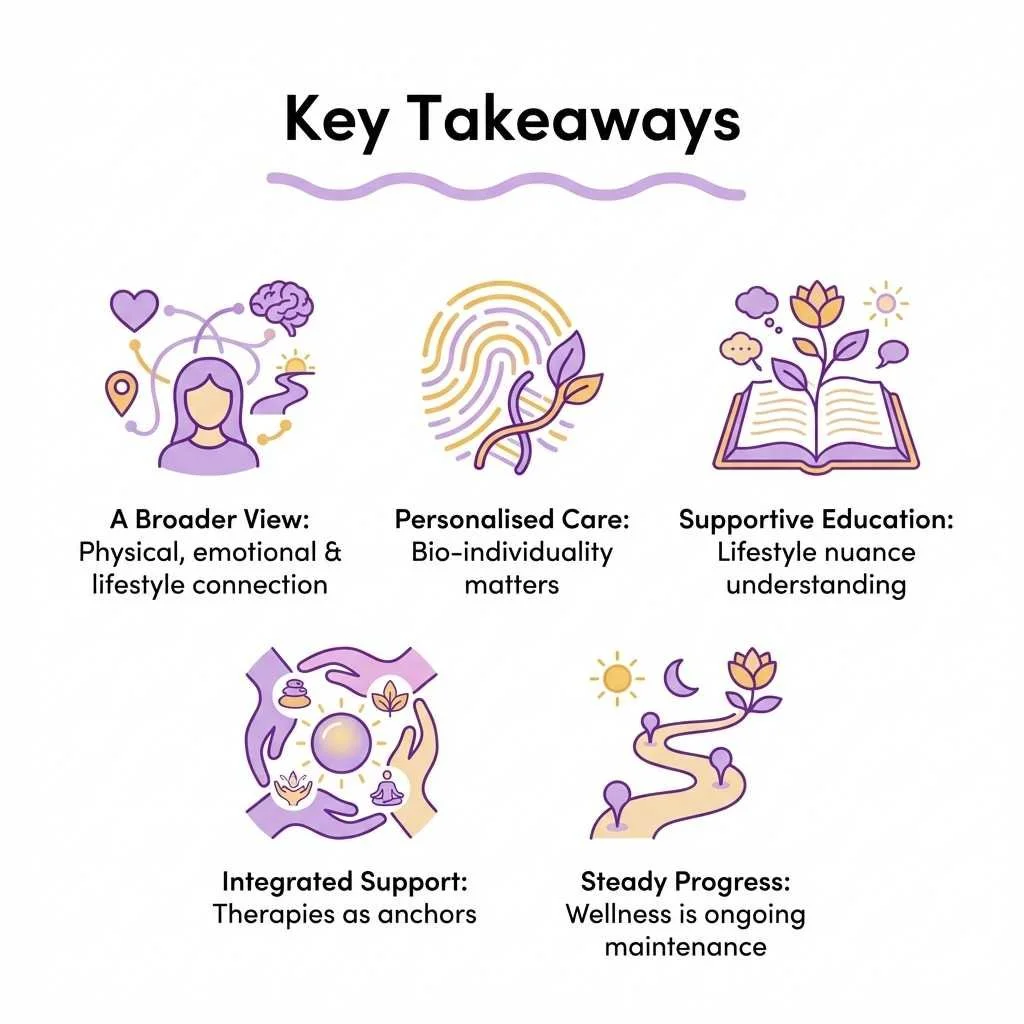
A Broader View: A Coach looks at the connection between your physical, emotional, and lifestyle habits.
Personalised Care: They focus on bio-individuality, acknowledging that every body has different needs.
Supportive Education: Practitioners often train through specific programmes like an iin holistic health coach course to understand lifestyle nuances.
Integrated Support: Therapies like Shiatsu Massage and Reiki combined in Croydon can act as physical anchors for your journey.
Steady Progress: Wellness is maintenance, not a one-time fix.
Defining the Role: What Is a Holistic Health Coach?
When people ask, "what is a holistic health coach?", they are often looking to bridge the gap between medical advice and daily reality. A coach is a guide who walks beside you as you navigate lifestyle changes.
They do not provide medical diagnoses. They do not offer "cures." Instead, they help you notice patterns in your life.
The Scope of Practice
A doctor might treat a specific illness. A health coach helps you build the daily habits that support your overall health. They act as a mentor.
They help you set goals that are realistic for your life. They provide accountability. Most importantly, they provide a safe space to discuss what is struggling.
Seeing the Whole Picture
This role focuses on the "whole" person. This includes your relationships, your work, and your environment. It is not just about the food on your plate.
Imagine your health is a house. If the foundation is cracked, painting the walls won't help. A coach helps you look at the foundation.
The Holistic Health Coach in Modern Healthcare
We live in a time of high stress. Data suggests that chronic stress affects a vast number of adults in the UK. This connects directly to the need for the holistic health coach in our current system.
Hospitals and clinics are often rushed. There isn't always time to discuss sleep hygiene or stress at work. Coaches fill this vital gap.
The Weather Warning
Think of your health like the weather. Often, the wind picks up before the storm hits.
Tension in your shoulders or trouble sleeping are the "winds." They are warnings. If we ignore them, the "storm" of exhaustion or illness arrives. A coach teaches you to check the weather.
They help you adjust your sails before the storm breaks. This is the essence of preventative care. It is about stewardship of your body.
The Concept of Bio-individuality
One of the most grounding principles used by coaches is bio-individuality. This is the simple recognition that every body is different.
We are often told there is one "perfect" diet. In reality, your needs change. They change based on your age, your stress levels, and the season.
Listening to Your Signals
A coach helps you quiet the external noise. They support you in listening to your own physical signals.
Maybe you need more rest in winter. Maybe raw foods don't agree with your digestion. Discovering this requires patience.
Whatever you discover, it must be sustainable. It is not about willpower. It is about finding what fits your life.
What to Look for In Holistic Health Coach Training
There are many paths to becoming a practitioner. Understanding these can help you choose the right person.
The Institute for Integrative Nutrition (IIN)
Many professionals choose to become an iin holistic health coach. This programme is well-known for its focus on 'Primary Food.'
Primary Food is the idea that we are fed by things other than food. Meaningful work, physical movement, and honest relationships are all forms of nourishment. If these are empty, no amount of broccoli will make you feel whole.
Other Education Paths
Others may start with a udemy holistic health coach course. These provide a solid introduction to wellness concepts. They are often a starting point for those curious about the field.
Regardless of valid certification, look for a humble practitioner. Look for someone who listens more than they speak. A good coach knows they are a student of your experience, not the master of it.
Clarifying the Practice: What Is Holistic Health Coach Scope?
It is important to understand the boundaries. We often see confusion around what is holistic health coach practice versus therapy.
Coaching vs. Therapy
Therapy often looks backward to heal old wounds. Coaching looks forward. It focuses on where you are now and where you want to be.
If deep trauma is present, a coach will refer you to a therapist. Often, the two work beautifully together. The therapist heals the past; the coach builds the future.
Coaching vs. Medical Advice
A coach does not interpret blood work. They do not prescribe medication. They support the doctor's plan by helping you stick to lifestyle changes.
For example, if a doctor says "lower your stress," a coach helps you find the practical ways to do that.
Integrating Bodywork: The Physical Anchor
Talking is powerful. But sometimes, the body holds tension that words cannot reach. This is where we at Norma Shiatsu Croydon offer support.
As a holistic practitioner in Croydon, we see how bodywork accelerates the coaching process.
Shiatsu as Maintenance
Think of your body like a car. You wouldn't drive a car for years without a service. You check the oil. You check the tyres.
Shiatsu is like a car service. It is a way of checking in. It prevents the breakdown.
By using gentle pressure, Shiatsu supports the nervous system. It moves you from "fight or flight" into "rest and digest." This physical state is essential for making clear decisions.
Reiki for Mental Space
Change is tiring. Mental clutter can make it hard to see the path. Reiki in Croydon offers a pause.
It provides a quiet space for the mind to settle. It does not "fix" your problems. It creates a balance that makes challenges feel smaller.
Combining coaching with Reiki allows the mind to catch up with the body.
Japanese Facials for Self-Image
How we see ourselves matters. A Japanese facial in London is not just about vanity. It is about care.
The face holds a lot of tension. Jaw clenching is a common sign of stress. Releasing this tension sends a signal of safety to the whole body. It is a kind act toward yourself.
Support for Teams and Business
Wellness is not just for individuals. Many businesses are now hiring coaches to support their teams.
A healthy team is a steady team. We offer Japanese Massage in London for corporate clients as well.
Bringing a sense of calm to the workplace reduces burnout. It shows staff that their wellbeing matters. It is a practical investment in the human side of business.
Using Metaphors to Understand Wellbeing
To understand the journey, we use simple pictures.
The Tidy Room
Imagine a tidy room. If a room is cluttered, it is hard to find your keys. It is hard to walk across the floor.
Stress and poor habits are the clutter. A coach helps you "tidy" the room. They don't throw everything out. They just help you organize so you can move freely again.
The Garden Path
Wellbeing is also like a garden path. If you don't sweep it, leaves cover the way. You can't see where you are going.
You have to sweep the path regularly. It is not a one-time job. It is maintenance. Therapies like Shiatsu are the broom. They keep the path clear.
The Evidence for Health Coaching
This is not just a nice idea. It is backed by data. Studies show that health coaching improves outcomes in chronic diseases.
Patients with diabetes or hypertension often see better results with a coach. Why? Because knowledge is not enough. We all know what to do. The hard part is doing it.
A coach bridges the gap between knowing and doing. This support system is statistically shown to increase adherence to medical advice.
Change Over Time: The Grounded Approach
We must be honest. Wellbeing is not a "transformation" that happens overnight. It is a series of small actions.
It is drinking water when you wake up. It is taking a deep breath before a meeting. It is booking a massage when your back aches.
Working with an in holistic health coach is an act of stewardship. You are managing the resources of your body.
You did not get tired in a single day. You will not find total balance in a single day. That is okay.
A Soft Invitation to Start
If you feel your life is out of balance, you do not have to find the way back alone. Sometimes, simply having someone to listen makes the next step clearer.
Wellness is about feeling "at home" in your own skin. It is about having the energy to do what matters to you.
If you are curious about further reading, our Shiatsu Blog has many articles on these themes.
Taking care of yourself is a quiet, ongoing practice. We are here to help you start that conversation with yourself whenever you are ready.
Common Questions (FAQ)
What is a holistic health coach compared to a doctor?
A doctor treats specific illnesses and provides medical intervention. A health coach provides lifestyle support. They help you follow through on wellness goals and preventative care. They act as an accountability partner for the daily habits that support your medical health.
How often should I see a coach?
Most people find that meeting every two weeks works best. This provides enough time to implement small changes. It keeps a sense of steady progress without feeling overwhelming. It allows life to happen between sessions so you can test what works.
Do I need a specific diet?
No. There is no single diet that works for everyone. A coach helps you experiment. They help you find what supports your energy levels and digestion best. This is the core of bio-individuality. Your food should make you feel nourished, not restricted.
Is this the same as therapy?
No. While coaching touches on emotions, it focuses on present habits and future goals. Therapy often deals with the past and deep psychological patterns. If you have deep-seated trauma, a coach will suggest working with a therapist alongside your wellness plan.
Sources
Health coaching for patients with chronic diseases (National Library of Medicine)
What is a Health Coach? (Institute for Integrative Nutrition)
About the Author
This article was brought to you by Norma Powell, a dedicated Shiatsu practitioner at Norma Shiatsu Croydon. With a warm and steady approach, Norma provides nurturing Shiatsu treatments designed to ease physical tension and promote overall relaxation. Her practice is rooted in empathy and a genuine commitment to helping people feel safe and comfortable in their own bodies, focusing on the tangible, restorative benefits of touch-based therapy.
