
Your Guide to Holistic Health Practitioner Jobs & Career Paths
In our current world, many people are noticing that they feel a bit out of balance. The noise of daily life is loud, and the pace is fast. People are looking for more than just a quick fix; they want to understand how to feel well in a more lasting way.
This shift has created a quiet but steady increase in interest for holistic health practitioner jobs. These roles are about looking at the person as a whole, rather than just a list of things to be corrected. It is not about magic. It is about paying attention.
If you are considering this path, it is a journey of both skill and quiet observation. It requires a commitment to study, a respectful heart, and a deep appreciation for the body's own pace. This guide will walk you through the landscape of this career with honesty and care.
Key Takeaways
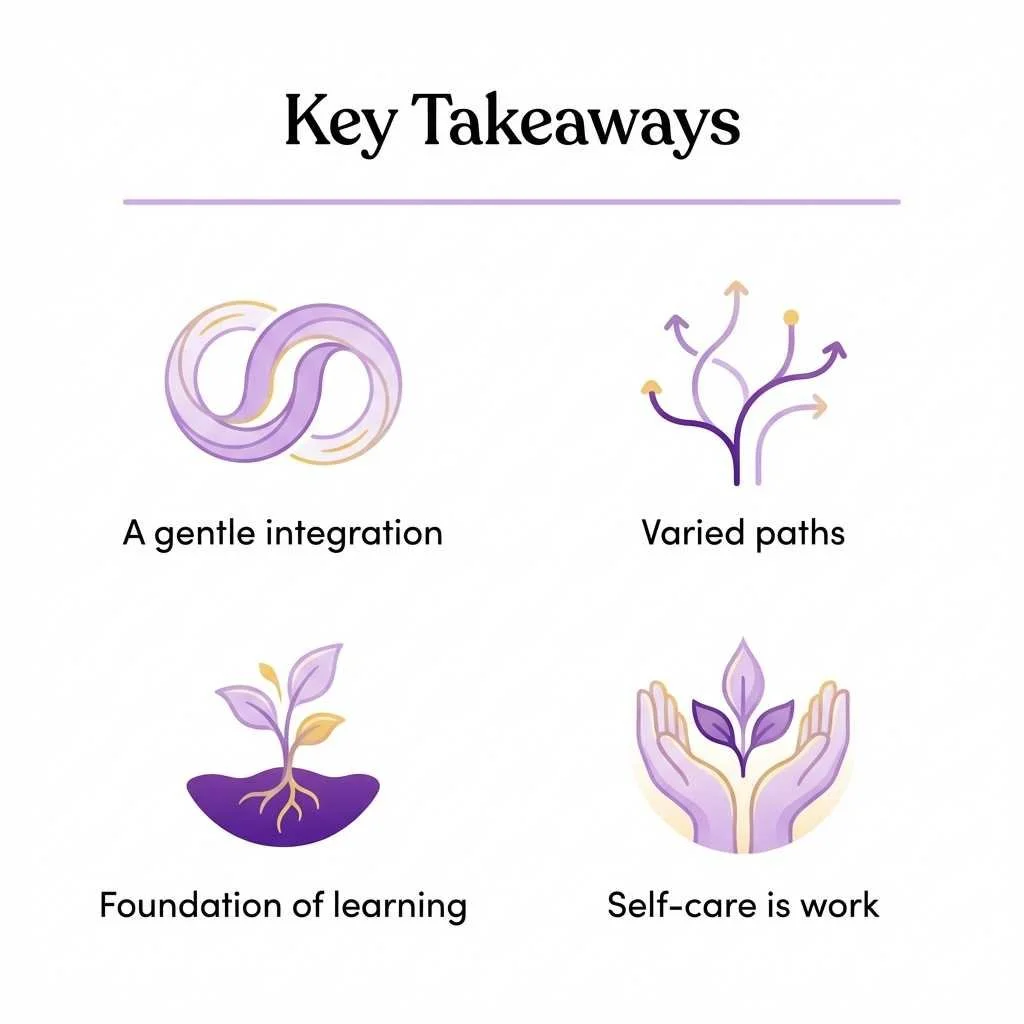
A Gentle Integration: Holistic work does not reject modern medicine; it acts as a steady companion to it, focusing on the whole person.
Varied Paths: There are many jobs for holistic health practitioner available, from private practice to quiet spaces in corporate offices.
Foundation of Learning: Building a career starts with recognised certifications and a commitment to ongoing wellbeing through study.
Steady Progress: Success in this field comes from honest work and building a good name over time, rather than looking for quick results.
Stewardship: You are not a "healer" but a steward who helps others manage their own physical and energetic resources.
Self-Care is Work: To support others, you must keep your own house in order. Your own wellbeing is a professional necessity.
Growing Demand: The global wellness economy is growing as people seek preventative care, creating a stable need for skilled hands.
The Landscape: Why the Interest is Growing
To understand the opportunities in this field, we must look at the wider context. The world is changing. According to the Global Wellness Institute, the wellness economy has seen significant growth, reaching trillions of dollars globally.
But numbers only tell part of the story. The real story is in the people we see every day.
More people are experiencing stress, burnout, and chronic tension. They are realising that waiting for a breakdown is not a good strategy. They want regular maintenance for the vehicle before the engine light comes on.
This is where holistic health practitioner jobs provide value. We offer a space for the body to rest and repair. We offer a pause button in a world that is always on fast-forward.
Moving Beyond "Alternative"
Years ago, practices like Shiatsu or Reiki were seen as niche. Today, they are becoming part of the standard conversation around health. Doctors are suggesting yoga. Companies are booking massage therapists. mental health charities recommend mindfulness.
This integration means that the career path is more stable than it was twenty years ago. It is no longer just for those on the fringes. It is a legitimate, respected way to serve your community.
What Does a Holistic Health Practitioner Do?
To understand holistic health practitioner jobs, it helps to look at the word "holistic." It simply means looking at the whole picture.
In a professional setting, this means we don't just look at a single complaint like a tight shoulder or a tired mind. We look at how a person's life, their habits, and their energy are all moving together. We listen to what the body is saying, even when the voice is quiet.
The Scope of the Work
A practitioner does not replace conventional care. Instead, they act as a steady companion to it. Their roles might include:
Manual Support: Such as Japanese Massage in London, specifically Shiatsu. This uses gentle pressure to help find a sense of balance in the body’s pathways.
Energy Observation: Like Reiki, which creates a quiet space for relaxation. It helps a person notice their own internal state without judgement.
Structural Awareness: Looking at how the body is aligned. We observe how that alignment affects how we feel every day.
Skin and Spirit: Therapies like a Japanese facial in London combine skincare with deep relaxation. This acknowledges that our face often reflects our internal stress.
The Day-to-Day Reality
The work is not always glamorous. It involves practical tasks. You must wash linens. You must answer emails. You must sweep the floor.
But the core of the day is the time spent with a client. It is an hour of focus. You listen to their words, but you also listen to their shoulders, their back, and their breathing. You offer a space where they can safely let go of the weight they are carrying.
The Philosophy: Looking for the Root
The core of any holistic health practitioner’s work is to notice what is happening underneath the surface. This is a bit like tidying a cluttered room.
If the room is messy, you don't just move the mess to another corner. You look at why the clutter is gathering. Is the cupboard full? Is there too much coming in and not enough going out?
You slowly clear a path so you can move more freely.
In holistic health practitioner jobs, we might ask if a physical feeling is a reflection of a person’s environment. Is the tight neck from a desk chair, or is it from the weight of worry? We are looking for the "why" rather than just the "what."
Being a Steward of Health
Choosing this career is an act of stewardship. You are helping others manage their most precious resource: their vitality.
This requires a lot of honesty. We do not promise miracles. We do not use words like "cure" lightly. We provide the tools so the client can do their own inner and outer work.
We are like a gardener. We can water the soil and ensure there is light. But the plant must do the growing itself.
Qualifications and Education
When looking for holistic health practitioner jobs, your first step is to ensure your foundation is solid. A good name is built on diligent study.
There are no shortcuts here. If you try to rush your education, your foundation will be weak. When the wind picks up—and it always does—a weak foundation will not hold.
Choosing the Right Path
In the UK, it is important to find programmes that are recognised by professional bodies. Groups like the Complementary and Natural Healthcare Council (CNHC) or the Federation of Holistic Therapists (FHT) set the standards.
Shiatsu: This is a rigorous path. It often involves a three-year diploma. This covers anatomy, physiology, and how the body’s energy moves (Traditional Chinese Medicine theory). It is a deep dive into both science and intuition.
Reiki: This usually involves different levels of learning (Degrees). Level 1 is for self-care. Level 2 is typically the minimum for those wanting to work professionally. Master Level is for those who wish to teach.
Integrated Wellbeing: This might include Japanese Facial principles. Here, we look at the face as a reflection of internal balance.
Learning the Basics
Regardless of the path, a good understanding of anatomy and physiology is essential. It is the language of the body.
You must know where the muscles attach. You must understand the nervous system. This knowledge allows you to communicate clearly with other health professionals. It ensures that the support you provide is grounded and safe.
If you are just starting, look for a holistic practitioner in Croydon or your local area who might offer mentorship or introductory workshops. Watching a professional at work is a valuable education.
Jobs for Holistic Health Practitioner: Exploring the Options
There is no single way to be a practitioner. You might find a way of working that fits your own temperament and lifestyle. The field is wide, and there is room for different approaches.
Private Practice
Many choose to work for themselves. This is a common path. You might convert a room in your home or rent a quiet space in a clinic.
The Benefit: You can set your own pace. You choose the lighting, the music, and the hours. You have total creative freedom.
The Reality: You are responsible for everything. You are the cleaner, the receptionist, the accountant, and the therapist. You must be disciplined.
The Need for Networks: It can be lonely. It is vital to connect with other therapists to share support.
Wellness Centres and Spas
Some practitioners find roles in established centres or quiet retreats. These places often look for people who can offer specific skills like Shiatsu or Reiki.
The Benefit: You join a team. The clients are provided for you. You do not have to worry about marketing or laundry.
The Reality: You have less control. You may have to work weekends or evenings. You must follow the centre's protocols.
The Goal: Success here is about consistency. You build a reputation for being reliable and grounded.
Corporate Wellness
This is a growing sector. More companies are noticing that their staff are feeling the weight of modern life. Absenteeism due to stress is a major cost for businesses.
They sometimes hire practitioners to lead quiet sessions or provide support during the workday. At NSC, we see this as a vital service.
Bringing Shiatsu Massage and Reiki combined in Croydon into a workplace can change the atmosphere. It is like opening a window in a stuffy room.
The Benefit: You reach people who might never walk into a spa. You help prevent burnout on a large scale.
The Reality: You must be very professional. You are working in a business environment, so your boundaries and timekeeping must be impeccable.
Building a Sustainable Practice
Securing holistic health practitioner jobs is about more than just your skills with your hands. It is about how you carry yourself and how you treat others.
Gentle Marketing
Marketing doesn't have to be loud. It does not have to be pushy. It can be a simple conversation.
Share what you know in a way that is helpful. Write a blog post. Give a talk at a local library. Be honest about what the work can do and what it cannot do. This builds a bridge of trust.
If you claim to cure everything, people will be skeptical. If you explain how you support the body's natural balance, people will listen.
Networking with Integrity
Connect with others in your local area. Talk to osteopaths, yoga teachers, and local shop owners.
If people see that you are disciplined and respectful, they will feel comfortable suggesting your work to others. Referrals are the strongest form of marketing because they come with trust attached.
Looking After Your Own House
A sustainable practice requires you to be well yourself. This means setting fair prices. It means keeping your own life in order.
You cannot pour from an empty cup. If you are overwhelmed, it is hard to create a calm space for someone else.
Rest: You need time off.
Receive: You should receive treatments yourself.
Reflect: Take time to process the emotional turning of the day.
Your own wellbeing is part of your professional responsibility. If you burn out, you cannot serve anyone.
The Value of Personal Experience
If you are looking at jobs for holistic health practitioner roles but aren't sure where to start, the best thing you can do is experience the work yourself.
Reading about swimming is not the same as getting in the water.
Receiving a Shiatsu session can help you understand structural balance better than any book. Feeling the warmth of Reiki in Croydon might help you notice the subtle shifts in your own energy.
These experiences give you empathy. You will remember what it feels like to sit on the mat, hoping for a bit of peace. You will remember the vulnerability of being a client. That memory will make you a better guide for others.
The Realities of the Path
It is important to be realistic about this work. It is a path of steady, honest labour. It is not a path to instant riches or constant bliss.
Emotional Presence: You will be listening to people's stories. Sometimes these stories are heavy. You need to learn how to be present without taking their weight onto your own shoulders. This is a skill that takes time to learn.
Physicality: Some work, like Shiatsu, can be physically demanding. You are using your body as a tool. You must look after your own body as if it were a garden. You must stretch, eat well, and rest.
The Slow Build: It takes time to build a "good name." It doesn't happen overnight. It takes years of showing up, doing good work, and being reliable.
Financial Flux: In the beginning, your income may vary. You need to plan for this. It is wise to have savings or a part-time role while you build your practice.
Further Learning Resources
To keep your practice fresh, you must stay curious. Read widely. Attend workshops.
For example, our Shiatsu Blog explores many topics related to seasonal health and body awareness. Reading how other practitioners articulate their work can help you find your own voice.
Common Questions (FAQ)
What can I expect to earn in holistic health practitioner jobs?
Earnings vary significantly based on location and employment type. In the UK, a self-employed practitioner might charge between £45 and £80 per hour, depending on experience. However, you must deduct room rental, insurance, and marketing costs. Salaried roles in spas typically offer a fixed annual income, which provides stability but may have a lower hourly rate effectively. It is a career that grows slowly as your reputation strengthens.
Do I need a medical degree?
No, you do not need a medical degree to practice holistic therapies. However, you do need rigorous certification in your specific field, such as a diploma in Shiatsu or reflexology. It is also vital to know your limits. A responsible practitioner knows when a client’s needs are beyond their scope and when to refer them to a doctor. Safety promotes trust.
How long does it take to qualify?
It depends on the depth you wish to achieve. Some introductory certificates take a few months. However, for a deep, professional standing in therapies like Shiatsu or Acupuncture, expect to study for three years or more. This time is necessary to understand the body deeply. Quick courses often leave you feeling unprepared for the complexity of real clients.
Is there a demand for this work?
Yes, the demand is steady and growing. As modern life becomes faster and more digital, people are craving physical connection and genuine rest. They are looking for ways to manage stress before it becomes illness. They are looking for practitioners who are grounded, trustworthy, and calm. The market is not saturated for those who are truly skilled and honest. [Source: Global Wellness Institute data on wellness economy growth].
A Soft Invitation
The path to holistic health practitioner jobs is one of purpose. It is a way to spend your days helping others find their own sense of balance. It is meaningful work.
If you feel that you have a heart for this, take your time. Research the training. Talk to other practitioners. Perhaps book a session for yourself to feel the work from the inside.
If you feel ready for a pause or want to see how this work feels in practice, you can see our current availability here.
There is no rush. The path will be there when you are ready to take the first step. Listen to the wind, check your own internal weather, and move forward at your own pace.
