
Understanding Holistic Health Therapies: Your Guide to Integrative Wellness
In our modern lives, we are often very good at measuring things. We track our steps, our heart rates, and our schedules. Yet, many of us still carry a persistent sense of unease that numbers cannot explain.
You might feel 'fine' according to a clinical test, but you still wake up with a heavy heart or shoulders that feel like they are pulled up to your ears. If you have ever felt that something is 'not quite right' despite being told everything is okay, you are not alone.
This is where holistic health therapies can offer a different perspective. Rather than looking at a single symptom in isolation, these therapies view you as a complete person. They focus on the quiet conversation between your mind, your body, and your surroundings. It is a shift from simply fixing what is broken to maintaining what is whole.
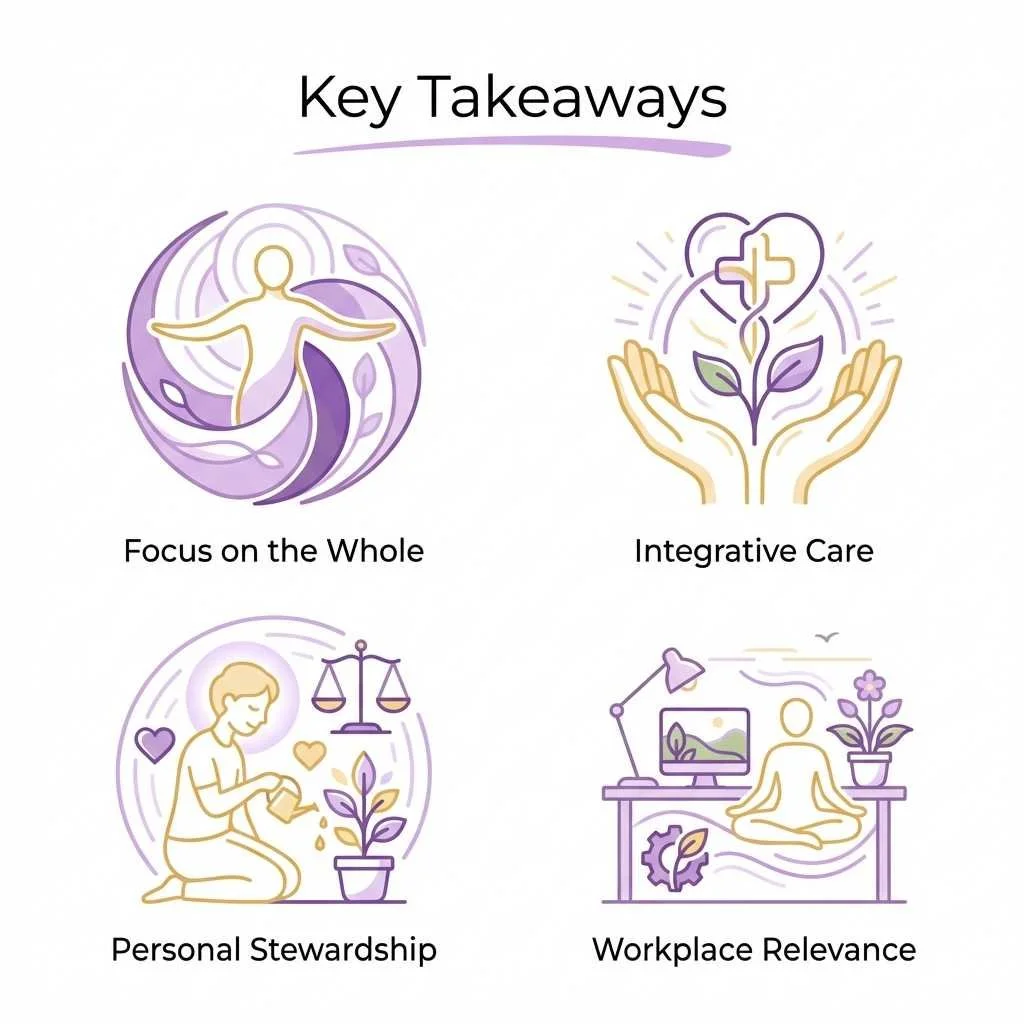
Key Takeaways
Focus on the Whole: Holistic health therapies look at the physical, mental, and emotional aspects of your life as one connected system.
Support, Not Fixes: These practices are tools for maintenance and awareness, much like tending to a garden, rather than one-time repairs.
Integrative Care: Holistic approaches work best alongside conventional medicine, providing a gentle space for relaxation and recovery.
Personal Stewardship: Wellbeing is an ongoing practice that involves small, consistent actions and honest self-reflection.
Safety First: A grounded practitioner will always respect your pace and never promise a miracle cure.
Workplace Relevance: Holistic practices are increasingly vital for managing burnout in professional environments.
Defining Holistic Health Therapies and Their Integrative Philosophy
The word 'holistic' simply means 'whole.' When we talk about holistic health therapies, we are talking about a way of looking at wellness that goes beyond just 'not being ill.' It is about finding a sense of balance in your daily life.
In the UK, the conversation around health is changing. We often hear this approach called integrative wellness. This doesn't mean moving away from your doctor’s advice. We must be very clear on this point. Conventional medicine is vital for treating acute illness and trauma.
Integrative care means adding another layer of support. It focuses on your quality of life, your stress levels, and your ability to rest. According to the National Center for Complementary and Integrative Health (NCCIH), these approaches are designed to work together, not in opposition.
Think of your health like a room in your house. Conventional medicine is excellent at fixing a broken window or a leaky pipe. Holistic health treatments are more like the daily act of tidying and airing out the room. Both are necessary to make the space comfortable to live in. If you never tidy up, the room becomes unlivable, even if the windows are intact.
The Modern Disconnect: Why We Need a Pause
We live in an era of constant input. Our phones buzz, our emails pile up, and our attention is fractured. This constant state of alertness keeps our nervous system in a 'fight or flight' mode.
Over time, this becomes our normal baseline. We forget what it feels like to be truly relaxed. We might only notice we are stressed when we get a headache or throw out our back.
This is like ignoring a weather warning. You might notice the wind picking up—a bit of tension in the neck, a short temper, or poor sleep—but you push through. Eventually, the storm arrives in the form of burnout or exhaustion.
Holistic therapies act as that early awareness system. They help you notice the wind before it becomes a gale. They invite you to stop, listen, and make small adjustments before a crisis occurs.
Exploring Diverse Practices: Mind, Body, and Balance
There are many different types of holistic health therapies. While they vary in technique, they all share the goal of helping you feel more grounded. They provide a counter-balance to the speed of modern life.
Mind-Body Awareness
These practices focus on how our thoughts affect our physical tension. It is well-documented that emotional stress can lead to physical pain. Techniques like mindfulness or simple breathing exercises help bridge this gap.
By paying attention to your breath, you signal to your body that you are safe. This is not just a feeling; it is a physiological shift. Your heart rate slows, and your muscles soften. It is a simple tool, but one that requires practice.
Bodywork and Physical Alignment
Bodywork involves manual touch to help the body settle. This is not about 'fixing' a muscle with force. It is about giving the body the space it needs to release tension on its own terms.
If you are looking for a Japanese Massage in London, you are likely seeking this kind of deep, structural support. Therapies like Shiatsu use gravity and body weight rather than muscular force. This allows the receiver to relax without bracing against the pressure.
Energy and Quietude
Practices like Reiki are very gentle and non-invasive. For the skepticism that sometimes surrounds energy work, the experience is often very practical. It provides a quiet hour where nothing is expected of you.
In our studio, we often see clients who are simply exhausted by the noise of the world. A session of Reiki in Croydon offers a rare stillness. This stillness can help balance the 'noise' of a busy life, making it easier for you to find your own sense of calm.
The Service Synergy: Shiatsu as a Physical Foundation
At Norma Shiatsu Croydon, we find that Shiatsu is a very practical way to begin exploring holistic health therapies. It is a traditional Japanese practice that uses comfortable pressure on specific points of the body.
Instead of using oils or deep tissue manipulation, Shiatsu works with the body’s natural rhythm. It is a bit like clearing leaves off a path. When the path is clear, it is much easier to walk without tripping.
During a session, we look for areas where tension has gathered. By staying with that tension in a calm and respectful way, we allow the body to notice it too. Often, once the body becomes aware of the tension, it can begin to let go of its own accord.
This approach is distinct from a standard spa massage. As a dedicated holistic practitioner in Croydon, my role is not just to rub muscles, but to support your body's own ability to regulate itself. We work with you, not on you.
Combining Modalities: The Power of Integration
Sometimes, one approach is not enough. You might feel physically tight but also emotionally drained. This is where combining therapies can be very effective.
We often recommend Shiatsu Massage and Reiki combined in Croydon. This combination addresses the heavy, physical tension first with Shiatsu. Once the body has settled, Reiki offers a space for the mind to rest.
It serves as a comprehensive "reset." You address the structural aches and the mental fatigue in a single, fluid session. It acknowledges that your sore back and your busy mind are likely connected.
The Face of Stress: Japanese Facials
Stress often shows up where we least expect it. Many of us clench our jaws or furrow our brows without realizing it. This facial tension sends a signal to the brain that we are under threat.
A Japanese facial in London is about more than skin deep beauty. While it certainly helps the skin look refreshed, the primary goal is deep relaxation.
By releasing tension in the jaw, neck, and scalp, we can influence the whole nervous system. The face is full of nerve endings. Gentle, rhythmic touch here can be incredibly soothing. It is another door into a state of deep rest.
Corporate Wellbeing: Holistic Care for Business Teams
The need for holistic health treatments extends beyond the individual. It is also a vital conversation for the workplace.
Stress is a leading cause of absence in the UK workforce. According to the Health and Safety Executive (HSE), millions of working days are lost each year due to work-related stress, depression, or anxiety.
We offer bespoke support for Business teams. This is not about a generic "wellness day." It is about teaching staff how to recognize their own stress signals.
We can provide on-site treatments or workshops. Giving your team access to Shiatsu or Reiki shows that you value their long-term health, not just their output. It is an investment in the human side of your business. A rested team is a resilient team.
The Benefits of Holistic Health Treatments: A Realistic View
It is important to be honest about what holistic health therapies can do. They are not 'miracles' or 'cures.' We must avoid over-promising.
However, the benefits of regular maintenance are real and tangible.
Managing Daily Stress
Stress is often a physical experience. It lives in the pit of the stomach or the tightness of the jaw. Holistic treatments trigger a 'parasympathetic' response. This is the body’s biological way of moving from 'fight or flight' into 'rest and digest.' This is a scientific process, not just a feeling.
Improving Sleep Quality
When your body is constantly on high alert, it is very difficult to fall into a deep sleep. By encouraging the nervous system to settle, many people find that their sleep becomes more restorative over time. This is an act of stewardship—giving your body the rest it needs to perform its daily work.
Building Emotional Resilience
Regular sessions can help you feel more 'even.' Life will still have its ups and downs. A massage will not solve a difficult work project or a family dispute. But it may give you the physical capacity to handle those things with less agitation. This is what we call ongoing wellbeing.
Balancing the Three Pillars: Physical, Mental, and Spiritual
In the world of holistic health therapies, we often talk about three pillars of health. These aren't complicated concepts; they are just different parts of being human.
The Physical Pillar: This is your body—the vessel that carries you through life. It needs movement, good food, and respectful touch. Taking care of your physical frame is a practical responsibility. It is like servicing your car so it doesn't break down on the motorway.
The Mental Pillar: This is how you process the world. Holistic practices encourage 'clean thinking'—being aware of your habits and choosing to be kind to yourself. It is about reducing the mental clutter that causes fatigue.
The Spiritual Pillar: This doesn't have to mean religion. It can simply mean your sense of purpose and your values. Why do you want to be well? Often, we want to be healthy so we can be a better friend, a more diligent worker, or a more present parent. connecting with this 'why' grounds your health choices in something meaningful.
Wellbeing as a Practice, Not a Destination
A common mistake is to think of wellness as something you 'achieve' and then stop. We often want a finish line. We want to be "fixed."
True health is more like keeping a garden. You don't just water it once and expect it to grow forever. It requires consistent, small actions. It involves weeding, watering, and waiting.
Holistic health therapies are most effective when they are part of a structured path. This means being consistent. A single session can feel lovely, but the real change over time comes from making space for yourself on a regular basis.
It also requires honest labour. A practitioner can help guide you, but you are the one who does the inner work. You must listen to your body and make small adjustments to your lifestyle. It is a partnership of mutual respect.
How to Choose the Right Support
When you are looking for support, it is wise to exercise discernment. You should look for a practitioner who feels like a steady companion rather than an 'expert' who has all the answers.
If you are reading our Shiatsu Blog, you will see that we value education and transparency. Here is what you should look for in any holistic professional:
Transparency: They should be clear about what they do. They should never promise a 'cure' for serious medical issues. If someone claims they can cure a chronic illness with a single touch, be cautious.
Respect: They should listen more than they speak. You should feel seen and heard without judgment. Your boundaries should always be respected.
Professionalism: Look for someone who belongs to a recognised body, such as the Shiatsu Society (UK). This ensures they follow a code of ethics, hold insurance, and maintain high standards of care.
Frequently Asked Questions
What should I expect from a holistic therapy session?
Expect a quiet, calm environment where you are treated with respect. In a Shiatsu session, you remain fully clothed, usually lying on a padded mat on the floor or a low table. The practitioner uses touch to support your energy flow. The pressure used is always adjusted to what feels 'productive' for you. It is a time for you to simply 'be' without needing to perform or explain yourself.
How many sessions will I need?
Because wellbeing is a slow conversation with yourself, we often suggest a few sessions to start with. This allows your body to get used to the practice and begin to find its own sense of balance. There is no set number, as everyone starts from a different place. Think of it like learning a new language; immersion and consistency help you learn faster than a single lesson once a year.
Are these therapies scientific?
Many holistic health therapies, like mindfulness and certain types of bodywork, are increasingly recognised for their ability to lower stress hormones and improve physical comfort. Research into the 'relaxation response' shows how these therapies positively impact the parasympathetic nervous system. However, we always view them as 'complementary'—they work alongside, not instead of, your medical care. We rely on verifiable data regarding stress reduction and pain management.
Is it normal to feel tired after a treatment?
Yes, it is very common. As your body moves out of a state of high tension, you may suddenly realise how tired you actually were. Adrenaline often masks exhaustion. When the adrenaline drops, the truth reveals itself. We always recommend taking it easy, avoiding heavy meals or alcohol, and drinking plenty of water after a session to aid the body's natural settling process.
An Invitation to Pause
Understanding holistic health therapies is really about understanding yourself. It is about acknowledging that you are more than just a list of symptoms or a set of numbers on a tracker.
We push ourselves incredibly hard. We try to be perfect employees, perfect parents, and perfect friends. Somewhere along the way, we lose touch with the simple act of being well.
If you feel that it is time to stop rushing and start listening to what your body is trying to tell you, we are here to walk beside you. We don't offer miracles, but we do offer a safe, grounded space for you to find your own way back to balance.
If you feel ready for a pause, you can see our current availability here. There is no rush. Take a deep breath, and move forward when you are ready.
Sources
NCCIH. (n.d.). Complementary, Alternative, or Integrative Health: What’s In a Name? NCCIH. https://www.nccih.nih.gov/health/complementary-alternative-or-integrative-health-whats-in-a-name
Mayo Clinic Staff. (2023). Massage: Get in touch with its many benefits. Mayo Clinic. https://www.mayoclinic.org/healthy-lifestyle/stress-management/in-depth/massage/art-20045743
Health and Safety Executive. (2023). Work-related stress, anxiety or depression statistics in Great Britain. HSE. https://www.hse.gov.uk/statistics/mental-health.htm
About the Author This article was brought to you by Norma Powell, a dedicated Shiatsu practitioner at Norma Shiatsu Croydon. With a warm and steady approach, Norma provides nurturing Shiatsu treatments designed to ease physical tension and promote overall relaxation. Her practice is rooted in empathy and a genuine commitment to helping people feel safe and comfortable in their own bodies, focusing on the tangible, restorative benefits of touch-based therapy. Connect with Norma on LinkedIn.
